Commentary: Does COVID-19 spell the end of long-haul budget airline flights?
SINGAPORE: Budget airline options on long-haul routes will decline significantly for at to the lowest degree the next few years, impacting air fares in pop markets such as Southeast Asia-Australia and Europe-Due north America one time international travel resumes post-obit COVID-19.
Long-haul, low-cost is a relatively small segment of global air transport but in contempo years grew rapidly, particularly in Asia, with profound economic impact equally flights of over five hours became more affordable.
Withal, it was hardly all rosy for the segment equally well-nigh all its operations were already unprofitable in 2019.
COVID-19 has brought an fifty-fifty bleaker outlook for this segment as the prospects for achieving profitability become more challenging – even in a five-year timeframe.
VIABILITY OF OPERATORS
Consequently, long-haul, depression-cost airlines will accept to restructure or fifty-fifty close downwards.
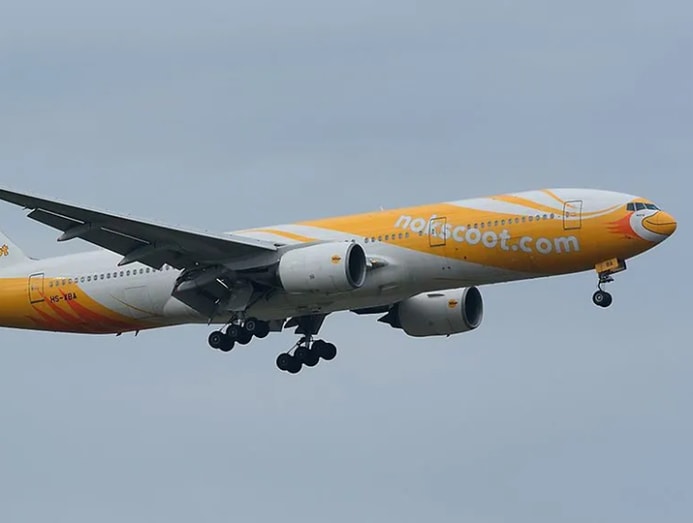
I, Thailand's NokScoot, already decided in late June to cease operations and liquidate.
A joint venture between Nok and Singapore Airlines' low-toll subsidiary Scoot, NokScoot was operating seven Boeing 777 aircraft to North Asia and Republic of india prior to COVID-19.
READ: Commentary: What my get-go flying in 4 months told me about the future of travel
NokScoot was one of a handful of low-toll carriers (LCCs) that was focused entirely or nearly entirely on long-haul routes and operating only widebody aircraft.
Most LCCs operating widebody aircraft also have narrowbody aircraft, which are mainly used for short booty flights of under v hours although in the terminal few years some five to seven hour routes were launched past LCCs using new generation longer range narrowbody shipping.
Prior to the pandemic at that place were approximately 200 widebody aircraft operated by over 20 LCCs, including more than 100 shipping operated past 12 LCCs in Asia Pacific.
Roughly eighty per cent of this fleet is now grounded and the small number of shipping operating are mainly carrying cargo.
SHORT HAUL SEES BETTER PROSPECTS
While COVID-xix has devastated the entire airline industry, long-haul LCCs have particularly been impacted every bit they rely on a market segment that has had well-nigh no demand since belatedly March.
Almost curt-booty LCCs have large domestic operations, which have partially recovered in recent months.
Brusk-booty international travel likewise has resumed in some regions, particularly Europe, while restrictions go along to impede long-haul travel with the exception of express one-manner repatriating traffic.
READ: Commentary: Airlines that shift towards long-booty flights will succeed mail-coronavirus
There were over 5,000 narrowbody aircraft operated by LCCs prior to the pandemic and merely around a tertiary of this fleet is currently grounded – a more than manageable figure compared to the approximately 80 per cent of grounded widebodies.
The short booty depression-cost segment is more established, much larger and has partially recovered while the less mature long-haul depression-toll segment cannot fifty-fifty starting time recovering until borders reopen and quarantine restrictions are lifted.
BIGGEST PLAYERS IMPACTED
The largest iii long-haul low-cost operators – AirAsia 10, Norwegian and Air Canada Rouge – have indefinitely suspended all their scheduled widebody passenger flights.
Air Canada Rouge has phased out its entire widebody fleet of 25 Boeing 767s, which were used to serve about 20 destinations in Europe and South America, and plans to only operate narrowbodies when it resumes services in the future.
Norwegian has resumed limited short-haul flights inside Europe using narrowbodies but does not intend to resume any long altitude flights until at to the lowest degree the summer of 2021.
Norwegian was operating 32 Boeing 787 widebody aircraft prior to the pandemic from bases in six countries – France, Italy, Norway, Spain, the United kingdom and the US.
Norwegian began long-haul flights in 2013, when information technology took delivery of its first Boeing 787 shipping, and has since pursued rapid expansion in this segment, focusing well-nigh entirely on the transatlantic market.
Singapore was dropped in January 2022 and its only other Asian destination, Thailand, was reduced prior to COVID-nineteen.
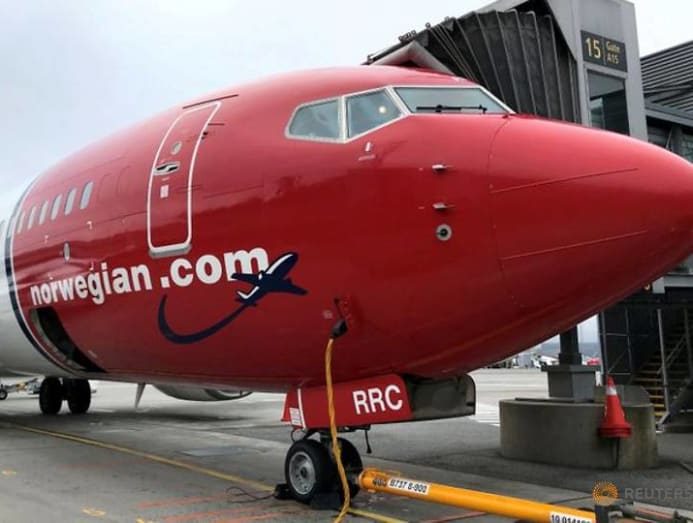
Norwegian was already struggling earlier COVID-nineteen, which forced a major financial restructuring in May that included almost all of the airline group'due south equity being handed to creditors and a government loan guarantee from Norway.
Norwegian recently warned it volition need another bailout to survive.
Even if Norwegian once more averts defalcation, its long-haul operation - which has always been unprofitable - may never resume.
READ: Commentary: Here's how Singapore tin can take the reins of opening up travel bubbles safely
Norwegian was the second largest widebody LCC after AirAsia X, which was operating 39 Airbus A330 aircraft as of the beginning of 2022 including 24 in Malaysia, 13 in Thailand and 2 in Indonesia.
AIRASIA X IN Trouble
AirAsia X was established in 2007 as an arm of AirAsia and the two companies have had separate stock exchange listings since 2013.
AirAsia 10 initially merely operated in Malaysia before launching affiliates in Thailand and Republic of indonesia, where AirAsia also has curt-booty affiliates, in 2014.
Last year AirAsia X carried around 9 million passengers, including vi.1 million past its Malaysian entity and two.six million by its Thai chapter.
AirAsia Ten had virtually 40 scheduled routes prior to COVID-xix: 28 from Kuala Lumpur, ten from Bangkok and two from Osaka.
Only charters take been operating from Indonesia since early on 2019, when the Indonesian affiliate suspended scheduled flights.
During the pandemic, AirAsia X has been operating a small number of passenger charter flights – but ii,600 passengers were carried in the 2nd quarter – and cargo charters.
It aims to resume scheduled flights in 2022 contingent on securing new capital letter, which it needs to survive.
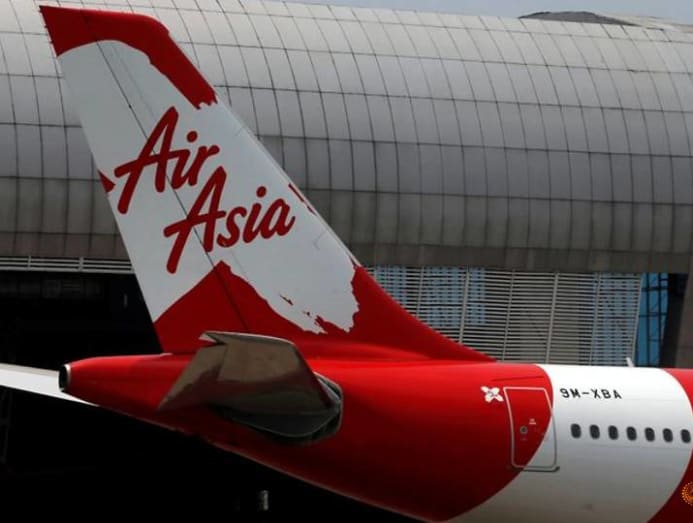
However, several investment firms do not await AirAsia X will be able to succeed at raising capital given its extremely weak financial position – information technology has non been paying some of its aircraft leases for nearly a year – and the overall bleak outlook.
Singapore-based leasing company BOC Aviation recently filed a Usa$23 million lawsuit against AirAsia 10 alleging a breach of obligations under charter agreements for iv A330s.
READ: Commentary: Airlines will need to review their fleets to boost passenger confidence and demand
A takeover past its bigger sister was considered a possibility but AirAsia X recently stated that in that location would be no support from AirAsia, which has also been struggling although it should be able to raise the upper-case letter needed to survive.
A plummet of AirAsia 10 would represent a huge overall setback for the long-haul low-cost segment given it is considered the pioneer of the model forth with Jetstar.
Australia-based Jetstar launched long-haul operations in 2006 and operated 11 Boeing 787s prior to COVID-xix.
Jetstar, which too has a large curt-haul performance with bases in four countries throughout Asia Pacific including Singapore, has not grown its long-haul operation in recent years but has remained an important competitor in this segment.
Australia has been one the world's largest long-booty low-cost markets for over a decade.
LCCs flew effectually 5 meg passengers on long altitude routes to or from Commonwealth of australia in 2019, capturing around fifteen per cent of Commonwealth of australia's full long-booty market.
Jetstar carried about three meg long-haul passengers in 2019, connecting Commonwealth of australia with six Asian countries and Hawaii.
AirAsia Ten was one of five foreign LCCs serving Australia prior to the pandemic along with Scoot, Cebu Pacific, Beijing Capital letter and Citilink.
Economic IMPACT TO COUNTRIES
Information technology could be several years earlier Australia, which has shut its borders until at least mid 2021, again has five million long-haul, low-toll passengers.
The economical implications for Australia volition be significant given that LCCs ofttimes concenter a different group of passengers than full service airlines, bringing in visitors that would otherwise non travel to Australia.
READ: Commentary: Tourism's plummet could worsen the economic crisis we face
Southeast Asia also relies on long-haul, depression-cost airlines to stimulate tourism.
Malaysia and Thailand each had around five million passengers in this segment in 2019.
Singapore was slightly smaller just its long-booty, depression-cost status could grow every bit rival hubs downsize.
With 20 Boeing 787s, Singapore-based Scoot was the fourth largest widebody LCC prior to the pandemic simply is probable to now become the largest.
SCOOT COULD FOCUS ON SHORT Haul
Scoot has the benefit of beingness fully-owned by Singapore Airlines, which has strong back up from main investor and sovereign wealth fund Temasek Holdings and has raised more new capital than whatsoever other airline grouping in Asia.
READ: Commentary: The outlook for Singapore Airlines has gone from bad to worse
However, Scoot is also restructuring and will focus more on its regional international routes over the next few years every bit the brusk-booty segment is expected to recover faster.
Prior to the pandemic, Scoot was operating the longest LCC route in the world – Singapore to Berlin.

While Berlin and Scoot'south other European destination Athens should resume eventually, information technology could exist a few years before it returns to Europe and even longer earlier information technology revisits European expansion plans.
Scoot's Australia and North Asia routes volition resume sooner – a few are already operating just with very express frequencies – and should recover faster once borders reopen.
SEGMENT WILL Await Different
The long-term prospects for long-haul low-cost remain bright, particularly for routes of five to eight hours within Asia Pacific, but several of the pre-COVID competitors may non be able to survive the prolonged downturn.
Ultimately new competitors will emerge, filling the void left by some of the pioneers.
Several long-booty depression-cost routes are besides probable to resume later the pandemic with new generation long range narrowbody aircraft.
For case, AirAsia could fill whatever void left by AirAsia 10 with A321LR and A321XLR shipping on 5 to eight-hour routes.
While I notwithstanding run into a brilliant future from 2024 or 2025, in the acting at that place will be some dark years of very few long-haul depression-cost flights.
The model was hardly proven prior to COVID and will now have to overcome even bigger questions about its long-term survivability.
Brendan Sobie is the founder of Singapore-based independent aviation consulting and analysis firm Sobie Aviation. He was previously chief analyst for CAPA – Centre for Aviation.
Source: https://cnalifestyle.channelnewsasia.com/commentary/commentary-does-covid-19-spell-end-long-haul-budget-airline-flights-283096

Post a Comment for "Commentary: Does COVID-19 spell the end of long-haul budget airline flights?"